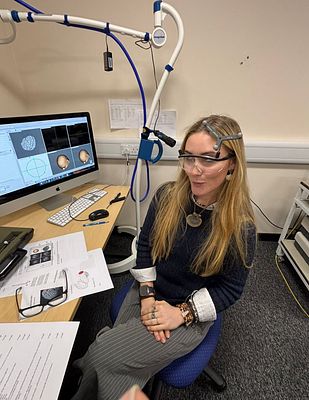
I am a PhD candidate at Durham University, where my research explores individual differences in face recognition and working memory capacity. My work investigates why people vary in their ability to recognise and remember faces, and how differences in cognitive capacity may contribute to variation in face recognition performance. I am particularly interested in understanding the cognitive mechanisms underlying face recognition and the factors that contribute to its successes and failures.
My research combines behavioural and neurocognitive approaches, with a particular focus on electroencephalography (EEG) and eye-tracking. By combining these techniques, I aim to investigate both the behavioural and neural processes involved in face recognition and memory, while examining how these processes vary between individuals. This multi-method approach allows me to explore not only whether people differ in their performance, but also why these differences occur at the cognitive and neural levels.
I completed my BSc in Forensic Psychology at the University of Chester in 2024, where I developed a strong interest in applying psychological research to forensic contexts. I subsequently completed an MSc in Cognitive Neuroscience at Durham University in 2025, where I continued to develop my interest in the relationship between cognitive processes and individual differences before progressing onto my PhD.
More broadly, my research interests lie at the intersection of cognitive neuroscience, face perception and forensic psychology. I am particularly interested in how neurocognitive research can be applied to real-world forensic problems, including the reliability of face recognition and memory in contexts where accurate identification can have significant consequences. Understanding the sources of individual variation in these abilities may help inform how face recognition evidence is interpreted and used within forensic settings.
Through my research, I hope to contribute to a better understanding of the cognitive and neural mechanisms underlying face recognition, while exploring how this knowledge can be translated into meaningful forensic applications. I am particularly interested in interdisciplinary research that bridges cognitive neuroscience and forensic psychology, and welcome opportunities to collaborate with researchers working across these areas.